
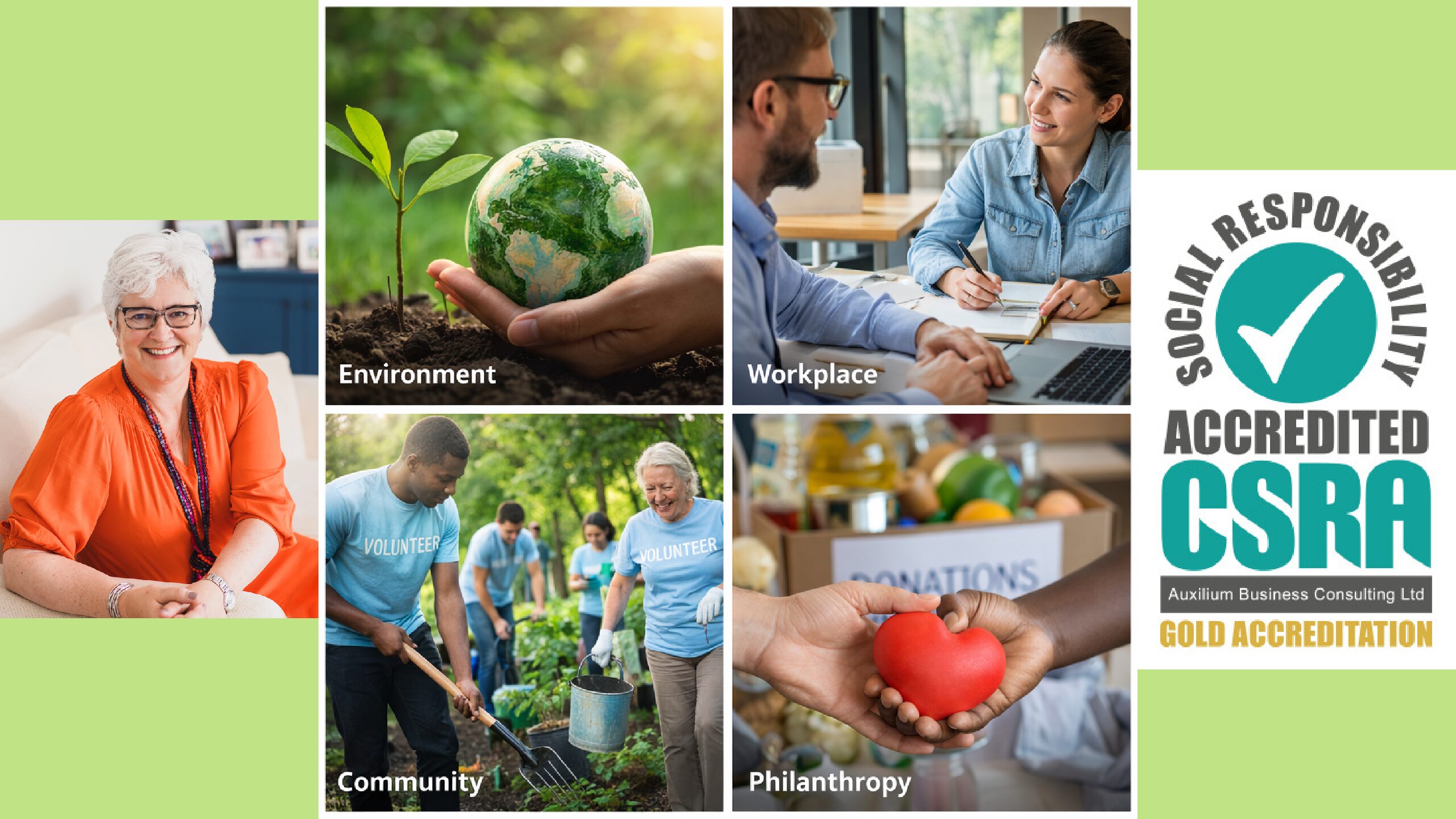
Many SMEs still assume CSR is something designed for larger businesses with formal strategies, published reports, and dedicated teams. CSR can sound corporate, complicated, and far removed from the day-to-day reality of running a small business, but that is often not the case.
In practice, many small businesses are already doing things that support their people, their communities, the environment, and the way they operate. The issue is rarely that they are doing nothing. But more often, it is that they are not recognising those actions as CSR, not structuring them clearly, and not evidencing them when it matters.
That is one of the reasons I enjoy working with SMEs so much. Many are already making thoughtful, responsible decisions every day, but they just do not always stop to see those decisions as part of a bigger picture.
So, before assuming CSR is something you have not started yet, it may be worth looking again.
Here are 10 signs your business may already be doing CSR without calling it that.
1. You care about how your team is treated
If you prioritise wellbeing, flexibility, inclusion, development, or simply aim to create a respectful and supportive workplace, that is part of CSR.
Looking after people is not an optional extra. It is a key part of building a responsible and resilient business. Whether that means being flexible around personal needs, encouraging open communication, investing in development, or creating a culture where people feel valued, these all count.
2. You support local suppliers or small businesses
Choosing local, ethical, or values-aligned suppliers is a responsible business decision and a practical example of CSR in action.
Many SMEs naturally prefer to work with people they know, trust, and can build relationships with. That can strengthen local economies, reduce unnecessary transport, and create more thoughtful supply chains. Even if you have never labelled it as CSR, your buying decisions say a lot about your business values.
3. You try to reduce waste
Whether that means printing less, reusing materials, reducing packaging, managing stock more carefully, or avoiding unnecessary purchases, these are all signs of environmental awareness.
You do not need a grand environmental strategy to start making a difference. Often, the most practical steps are the ones businesses are already taking because they make sense operationally as well as environmentally. Saving waste often saves time and money too.
4. You give time, money, or resources to good causes
Supporting charities, community groups, schools, events, or fundraising initiatives is one visible part of CSR, even though it is only one piece of the wider picture.
This is often the area people think of first when they hear CSR, but it is important to remember that it is not the whole story. Still, if your business gives back through donations, volunteering, sponsorship, or practical support, that is absolutely part of your wider impact.
5. You make decisions with integrity
Being honest with clients, paying fairly, doing what you say you will do, and operating with transparency are all signs of responsible business practice.
Integrity is not always easy to measure, but it is often easy to feel. It shows up in the way a business behaves when things go wrong, how it communicates, how it treats people, and how seriously it takes its responsibilities. A business that acts with integrity is already building a strong foundation for CSR.
6. You think about the impact of your operations
If you consider travel, energy use, sourcing, waste, efficiency, or the wider footprint of how your business runs, you are already thinking in a more responsible way.
This is where CSR and operations often overlap. Businesses do not need to separate responsibility from the way they work. In fact, the strongest approach is often to embed it into everyday decision-making. Small changes in operational thinking can make a meaningful difference over time.
7. You have policies or practices that protect people
Health and safety, equality, flexible working, safeguarding, grievance handling, and clear procedures all help create a safer and more responsible workplace.
Sometimes businesses dismiss these as “just things we have to do,” but they matter. They show care, accountability, and a commitment to doing things properly. Good policies are not just paperwork when they are understood, applied, and used to support people well.
8. You invest in training and development
Helping people learn, grow, and feel supported in their role is an important part of workplace CSR and one that is often overlooked.
Training is not only about performance. It is also about confidence, progression, engagement, and creating opportunities. When a business invests in people, it sends a strong message that they matter and that their growth is worth supporting.
9. You contribute to your community in ways that go beyond selling
This could include mentoring, volunteering, sharing expertise, supporting local initiatives, or taking part in community projects.
Community impact is not always about money. Sometimes it is about showing up, sharing knowledge, creating connections, or using your position to support others. Many SMEs do this naturally because they are rooted in real relationships and local networks.
10. You want your business to stand for something more than profit
If you care about values, legacy, trust, doing the right thing, and making a positive difference, then CSR is already part of how you think.
Profit matters. Of course it does. But many business owners also want to build something they can be proud of. They want their business to reflect their values, create trust, and have a positive influence on the people around them. That mindset matters because it shapes the choices a business makes every day.
The real issue is often not action, but visibility
If you recognised your business in several of these signs, then CSR may already be more present than you think.
The next step is not to start from scratch. It is to identify what you are already doing, strengthen it where needed, and evidence it clearly.
That is where many SMEs get stuck. Not because they are doing nothing, but because they do not yet have the structure, language, or confidence to show it.
And that matters.
Because when you can clearly explain and evidence your responsible business practices, you are in a far stronger position to build trust, support growth, respond to opportunities, and stand out for the right reasons.
CSR does not have to begin with a big strategy document. Often, it starts by recognising what is already there and being more intentional about how you build on it.
If your business is already showing signs of CSR but you are not sure how to structure it, evidence it, or communicate it more clearly, that is exactly where support can help.
If you would like to explore what CSR already looks like in your business, I would be happy to chat with you further.