
🌱 The Moment I Saw Waste Differently ♻️
Before I started my own business, I spent 17 years working for a high-end furniture manufacturer in South West London. My role spanned office management, operations, and meeting tight client deadlines.
Efficiency was everything. I thrived on organisation, smooth processes, and ensuring projects kept moving. But what has stayed with me most from that time wasn’t the finished pieces leaving the workshop. It was what was left behind.
👀 The Waste I Couldn’t Unsee
One afternoon, I paused long enough to look around the workshop with fresh eyes.
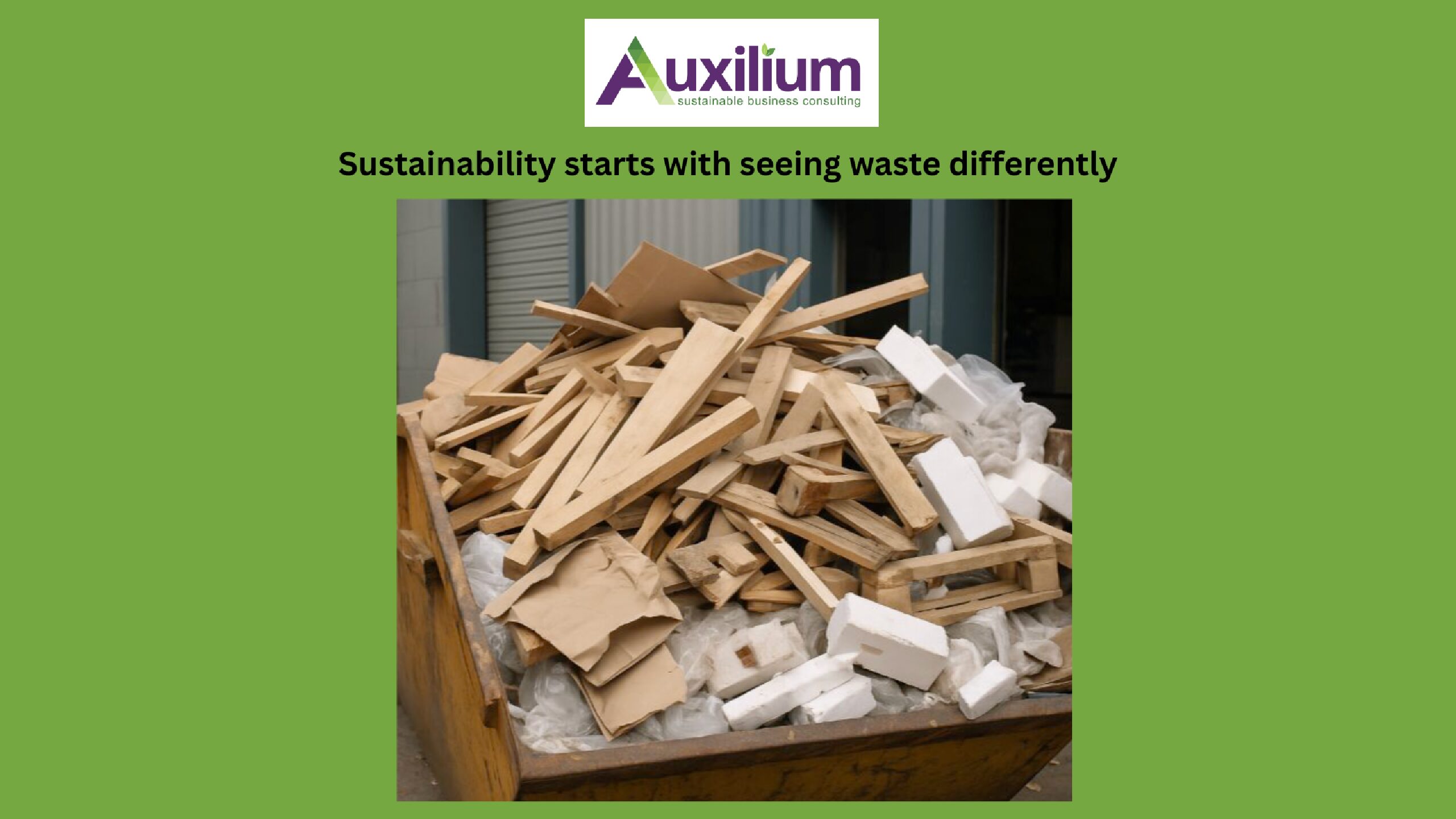
There were piles of beautiful hardwood offcuts stacked high. Mountains of polystyrene and plastic wrap were spilling over the sides. Crates of packaging waste lined up, all destined for the skip.
No one questioned it as it was just “the way things were done.”
But I couldn’t unsee it. I remember thinking:
If this is just one project, in one workshop, how much is being wasted across the entire industry?
That moment stuck with me.
💡 Waste as a Signal, Not a Side Effect
It wasn’t only the materials. I realised it was also lost value—the wasted time, money, and opportunities hidden inside those skips.
From that day forward, I stopped seeing waste as an inevitable by-product of operations. Instead, I began to treat it as a signal: a red flag showing where resources, profits, and potential were quietly leaking away.
That shift in mindset pushed me to start asking better questions—questions that small businesses should still be asking today:
🌱 Can this be reused or repurposed?
Offcuts, surplus packaging, even wasted time can often be redirected. What looks like scrap may hold hidden value—a second life as a new product, a material to share with another business, or even an opportunity for process innovation. Reuse isn’t just environmentally smart; it’s cost-smart.
🌱 Why are we over-ordering?
Excess stock, duplicate software, too many suppliers—these often point to a breakdown in forecasting, communication, or systems. Over-ordering doesn’t just create waste; it ties up cash, fills valuable space, and drains energy. The real question is: where in the process are we buying more than we truly need, and how can that be tightened?
🌱 What would a leaner, smarter, more sustainable process look like?
Waste signals inefficiency. By mapping workflows, identifying bottlenecks, and challenging “how it’s always been done,” businesses can uncover opportunities to streamline. Leaner doesn’t mean cutting corners; it means cutting out the friction, duplication, and blind spots that cost time and money while straining people and the planet.
🌟 A Lesson That Shaped My Career
That shift in perspective became the foundation of my approach to operations. It shaped how I worked in every role that followed and ultimately influenced the sustainability-first consulting I deliver today.
For me, waste isn’t simply a materials issue. It’s a business opportunity in disguise.
And that early moment in the workshop still drives my mission now: helping small businesses rethink how they use their time, space, energy, and materials—so they can grow with purpose while leaving a lighter footprint.
🤝 Let’s Rethink Waste Together
If you’re looking to review your operations, cut waste, and build a more sustainable business model, I’d love to help.