
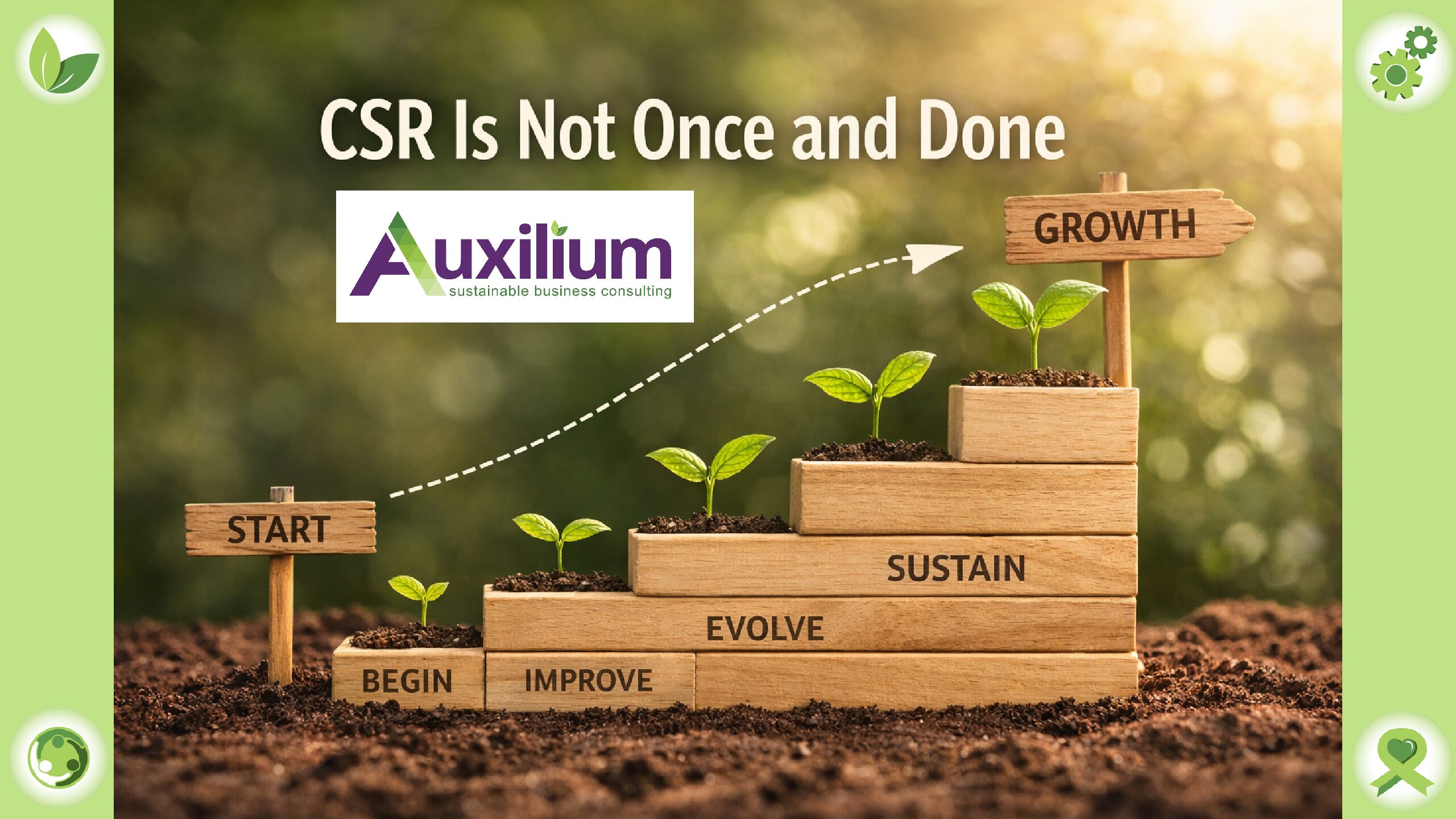
There is still a common misunderstanding that Corporate Social Responsibility is something a business can “do” once and then move on from.
A fundraiser, a volunteering day, a sustainability campaign, a community donation, a new policy, or a staff initiative may all be positive steps. But on their own, they do not create a responsible business.
CSR is not once and done, it is not a single action, a one-off gesture, or a page on a website that is written and then forgotten. It is a work in progress. It should grow with your business, develop with your people, and strengthen through regular reflection, action, and improvement.
That is where its real value lies.
One good action does not equal an embedded approach
Many SMEs are already doing more than they realise. They may support local causes, care about staff wellbeing, reduce waste, donate time or resources, or try to make more thoughtful business decisions.
All of that matters.
But CSR becomes far more meaningful when it is not left as a collection of separate activities. It needs structure, consistency, and visibility. It needs to be reviewed, built on, and connected to the wider way the business operates.
Without that, even good work can become isolated, inconsistent, or forgotten.
A one-off action may feel positive in the moment. An ongoing approach creates lasting value.
Why CSR should always be evolving
No business stands still for long. Teams change. Customer expectations shift. Supply chains face pressure. Communities have different needs. Environmental priorities move higher up the agenda. New opportunities and risks appear.
If your business evolves, your CSR approach should too. What felt relevant two years ago may no longer reflect where your business is today. What started as a small act of goodwill may now need to become something more embedded, measurable, and intentional.
This does not mean starting from scratch every time. It means checking in regularly and asking sensible questions.
What are we already doing well?
What has changed?
Where are the gaps?
What could we improve?
How do we evidence what we are doing?
That is how CSR becomes practical, credible, and useful.
Progress matters more than perfection
One of the reasons some businesses hesitate with CSR is because they assume they need a perfect strategy before they begin. They do not. In fact, one of the most realistic and effective approaches is to start with what is already happening and build from there.
You do not need to have every answer. You do not need a polished report full of jargon. You do not need to be doing everything at once. What matters is that you pay attention, take responsibility, and commit to improvement.
CSR works best when it is treated as an active process, not a finished task.
A business that keeps learning, adapting, and improving will often be far more credible than one that makes bold statements but has little substance behind them.
The benefits of treating CSR as a work in progress
When CSR becomes part of how a business thinks and operates, the benefits go well beyond appearances.
1. It builds credibility
People can tell the difference between a one-off gesture and a genuine ongoing commitment. Consistency builds trust.
2. It creates better evidence
When you review and develop your CSR efforts over time, you have more to show. That makes it easier to respond to client questions, tender requirements, accreditations, and stakeholder expectations.
3. It strengthens reputation
Businesses are judged not only by what they say, but by what they repeatedly do. Ongoing CSR helps shape a stronger and more authentic reputation.
4. It improves internal culture
When responsible practices are embedded, staff are more likely to feel involved, valued, and connected to the bigger picture.
5. It supports better decisions
CSR is not just about external activity. It can influence how you lead, recruit, communicate, purchase, support, and grow.
6. It reduces the risk of empty claims
A business with regular actions, visible effort, and measurable progress is less likely to fall into vague statements or token gestures.
Small steps still count, if they continue
CSR does not need to be dramatic to be valuable. Sometimes the most effective actions are the quieter ones that happen consistently over time.
Reviewing suppliers.
Improving staff support.
Reducing waste bit by bit.
Creating more inclusive practices.
Supporting the local community in ways that align with your values.
Tracking what you do so it can be communicated clearly and honestly.
These are not headline-grabbing actions, but they are often the things that create real and lasting impact. The key is not whether an action looks impressive. The key is whether it is part of an ongoing pattern of responsible business practice.
CSR should be part of the business, not separate from it
One of the biggest shifts for SMEs is moving from seeing CSR as an extra, to recognising it as something that can sit within the heart of the business. It does not have to be a side project. It can influence operations, workplace culture, client relationships, partnerships, community impact, and long-term resilience.
When CSR is embedded rather than occasional, it becomes easier to maintain, easier to evidence, and far more relevant to the real business. That is when it stops being a box to tick and starts becoming a strength.
Final thought
CSR is not a campaign you complete and file away. It is not once and done.
It is an ongoing commitment to paying attention to how your business operates, who it affects, and where it can do better. It is about recognising the good you are already doing, being honest about what still needs work, and continuing to build from there.
The businesses that stand out are rarely the ones making the biggest noise. They are often the ones doing the work consistently, thoughtfully, and over time.
That is what makes CSR credible, that is what makes it valuable and that is what makes it last.