
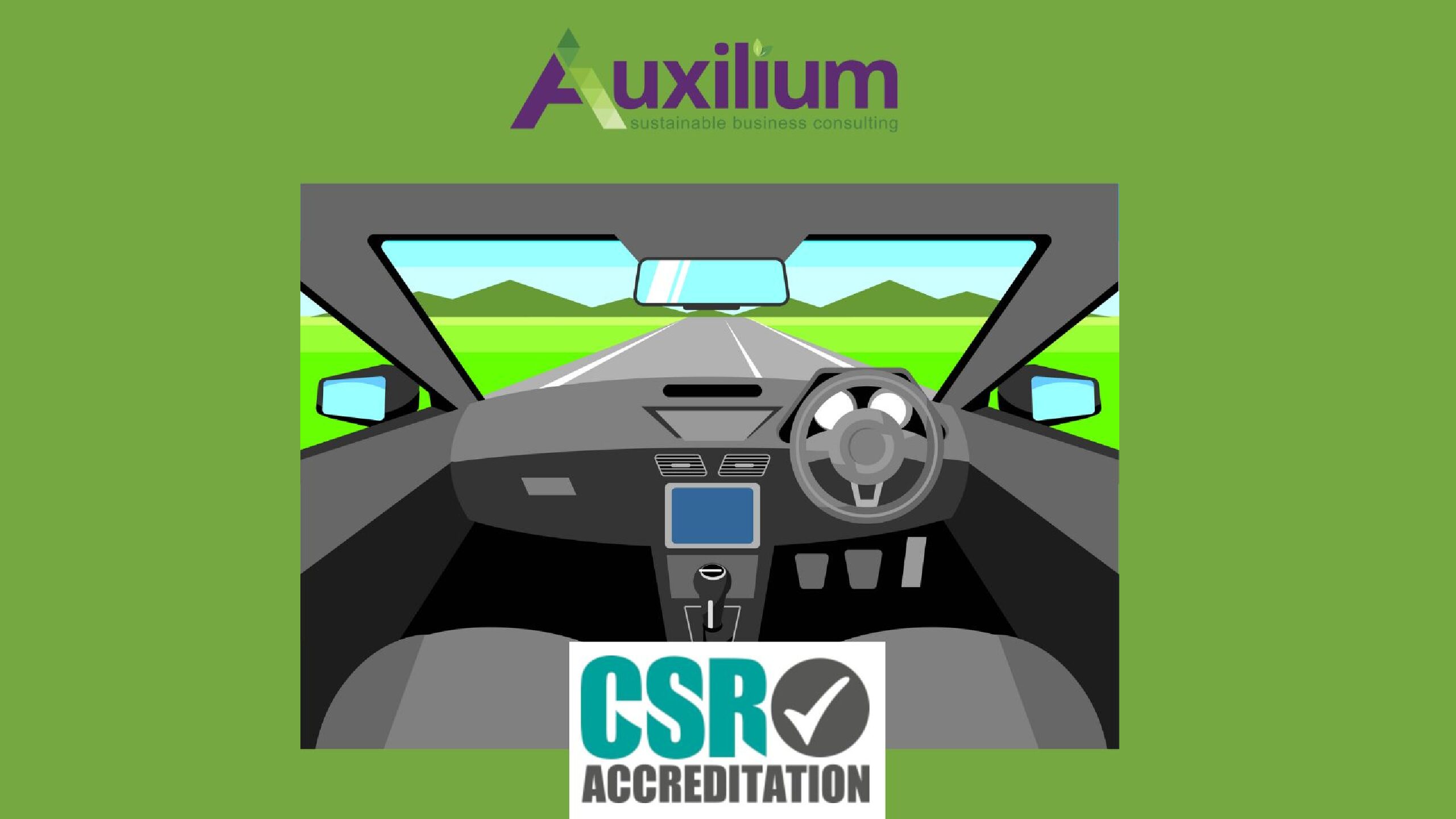
Why the “journey” matters and how to make it feel manageable.
When someone talks about doing a CSR accreditation, they often describe it as a “journey,” and they’re right. However, not in the vague, fluffy way people sometimes mean. It’s a journey in the same way learning to drive is a journey: practical, structured, occasionally nerve-wracking, and genuinely confidence-building once you find your rhythm.
If you’ve ever learned to drive, you already understand the process more than you think.
1) The decision to start is like booking your first lesson
Nobody books driving lessons because they’re already an expert. They do it because they want a clear path, guidance, and a goal. The CSR accreditation starts the same way. It’s the moment you decide you want to move from:
- “We try to do the right thing”
to - “We can prove what we do, how we do it, and how we improve it.”
That decision alone is a shift in professionalism, and it’s what clients and stakeholders can feel.
2) Learning the standard is learning the Highway Code
Before you drive, you learn the rules of the road. With CSR Accreditation, the “rules” are the accreditation framework: what it covers, what evidence is expected, and what good practice looks like for a business of your size.
This stage saves time and reduces stress because it stops you from doing well-meaning work that isn’t recognised or measurable. It gives you a map.
3) The early work is mastering the controls
Every new driver starts with the basics: mirrors, clutch, steering, and signals. It can feel awkward at first, and that is because you’re building new habits.
The CSR Accreditation is similar. The early stage is about putting foundational controls in place:
- a small set of clear policies (not a giant manual nobody reads)
- defined responsibilities (who owns which areas)
- simple ways to record actions and decisions (consistency beats complexity)
This is where businesses often realise: “We already do some of this, but we just don’t capture it properly.”
4) Practice drives are implementation and evidence-building
Driving confidence comes from practice, not from reading.
The CSR Accreditation is the same. This is the “doing” phase:
- You implement improvements that are realistic and repeatable
- You start keeping proof (training logs, supplier checks, actions taken, KPIs, comms)
- You build a routine rather than relying on last-minute effort
This is also where the journey begins to feel motivating, because progress becomes visible.
5) Mirrors and signals are measurement and communication
Good drivers check mirrors and communicate clearly. They don’t surprise people; they behave predictably.
The CSR Accreditation requires the same discipline:
- Mirrors (measurement): Choose a small set of KPIs you can sustain
- Signals (communication): Talk about what you do accurately, clearly, and consistently
Credibility is built here. Not through big claims but through honest, evidence-based statements.
6) Stalling happens, and it’s not failure
Every learner stalls. It’s not a sign you should quit; it’s part of becoming competent.
The CSR Accreditation has its version of stalling too:
- A policy exists, but isn’t applied day-to-day
- Great activity is happening, but no one is recording it
- Supplier standards aren’t clear yet
- Targets are too ambitious and need refining
The skill isn’t avoiding every wobble. The skill is correcting calmly: adjusting, improving, documenting, and moving forward.
7) The assessment is the driving test
A driving test isn’t looking for perfection. It’s checking whether you’re safe, consistent, and in control.
A CSR Accreditation roadmap and assessment are similar. It typically tests whether you can demonstrate:
- You understand the standards you’re committing to
- Your claims match your evidence
- Risks and responsibilities are managed properly
- Improvement is continuous, not just a one-off project
Passing isn’t about being the biggest or the flashiest. It’s about being credible and consistent.
8) The CSR Accreditation is your licence, so you can then drive with confidence
When you pass your test, you’re not “done.” You’re licensed to operate responsibly, with confidence and accountability.
The CSR Accreditation gives you that same shift:
- Stronger trust with clients and partners
- Clearer internal standards and accountability
- Improved procurement readiness
- A structure for ongoing improvement
And, like driving, you maintain your standards by staying in practice: conducting regular reviews, implementing small upgrades, and providing honest reporting.
Final thoughts…..
So the CSR Accreditation isn’t a mountain you have to climb in one go. It’s a practical skill, and like any skill, it gets easier with structure, repetition, and the right support.
If you can learn to drive, you can absolutely build an accredited CSR-A approach:
- Steady hands: a clear policy and priorities that fit your business (not generic statements).
- Clear signals: simple actions your team can repeat and evidence consistently.
- Eyes on the road: a focused plan with milestones, ownership, and regular check-ins.
- Progress you can prove: documentation that shows what you do, how you do it, and the impact you’re achieving.
The CSR-A Accreditation is simply the framework that helps you turn good intentions into a credible, measurable programme and one that clients, stakeholders, and your team can trust.
I’ve been on this journey myself, and I know what makes it feel manageable. I can help you get started with a clear first step: understanding where you are now, what evidence you already have, and what to prioritise next.
If you’re ready to move from “we should” to “we can” evidence our impacts, then message me, and we’ll take the first step together. Please get in touch with me via my email, alex@auxiliumconsulting.co.uk